Rhode Island In Color asked the Executive Director of Rhode Island Latino Arts , Marta V. Martinez,speak about the new production of La Broa’.
For someone who doesn’t know about the show, how would you describe it?
La Broa’ en tu barrio isn’t a traditional historical play, it’s a theatrical narrative woven from oral histories that I recorded since 1991 of the lived experiences of Latino Rhode Islanders. The stories were adapted by playwright Orlando Hernández and all characters in the play are inspired by real people who represent the the lives and experiences of families who built lives along Broad Street and others in Central Falls. People who grew up in these neighborhoods often recognize themselves or someone they knew in the stories.
Were there any changes or adaptations that had to be made to bring the show outdoors and to different locations rather than a single stage?
Yes. The original production at Trinity Rep was created for a theater, where lighting, scenery, and stagecraft help tell the story. For Teatro en El Verano, Orlando thoughtfully reimagined the play for parks and public spaces. That meant simplifying the staging while keeping the heart of the story intact. We wanted audiences to focus on the people, the language, and the relationships rather than elaborate sets. Performing outdoors also feels appropriate because many of these stories unfolded in public spaces on sidewalks, in bodegas, at neighborhood gatherings, and on Broad Street itself. Bringing the play into the community allows those stories to return to the places that inspired them.
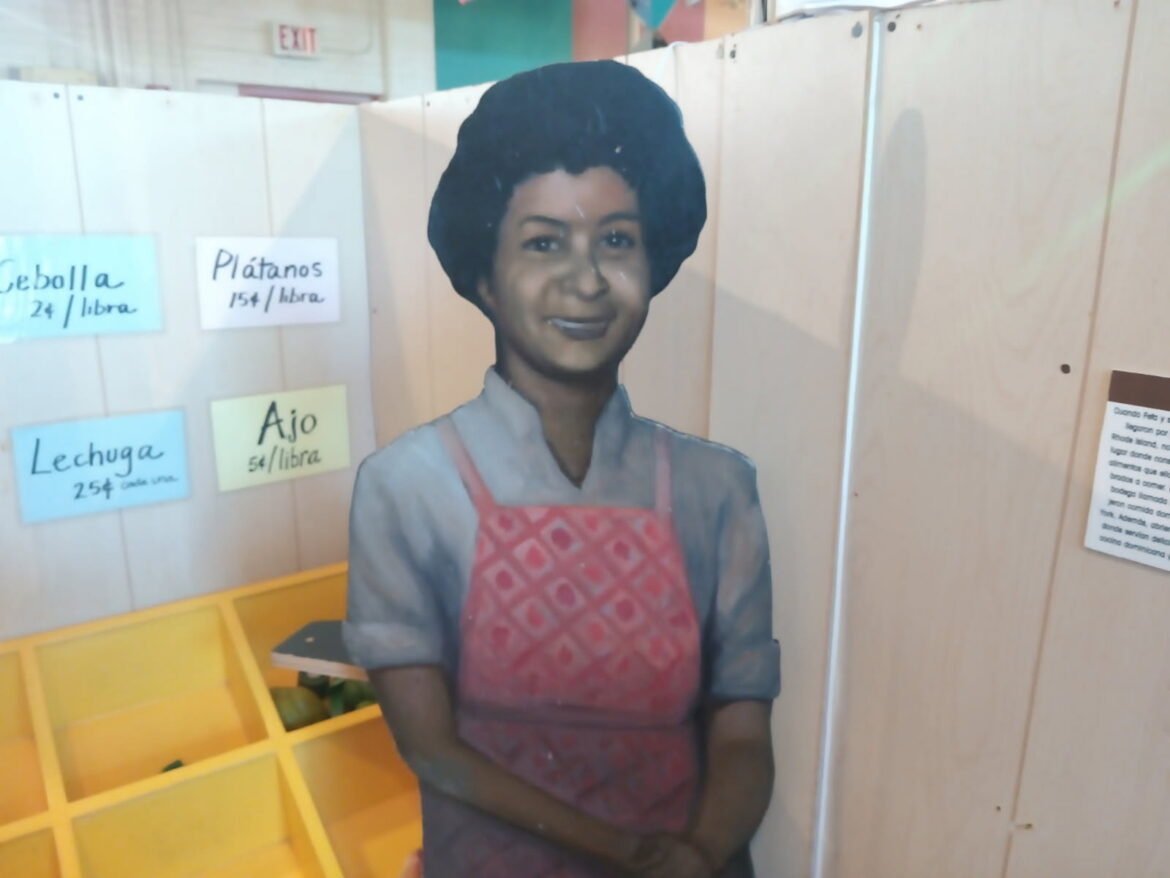
To me, Doña Fefa and her market represent community and a found sense of belonging in the show. What should people know about the real woman?
That’s exactly how many people remember her. For many Dominican families arriving in Rhode Island in the 1960s and 70s, Doña Fefa the co-owner of the bodega and the market itself became one of the first places where they could hear Spanish, buy familiar foods, ask questions, find housing or employment, and just be themselves. When I interviewed her in 1991, I realized I wasn’t just documenting the history of a grocery store, but that I was documenting the creation of “community.” Her bodega became an informal community center long before there were organizations serving Latino residents in the way we know today. What I admire most is that she resisted the idea of herself making history. She always told me that she was just helping people, and as I look back, we can see just how significant that was.
You, Marta, are often the one recording history in the background. How did it feel seeing yourself as a character in the show?
It was definitely unexpected! I’ve spent most of my life asking questions, taking notes, and making sure other people’s stories are preserved. I never thought of myself as part of the story. So, when Orlando included me as a character, I initially felt uncomfortable, but later understood why he made that choice. The play isn’t just about the people I interviewed; it’s also about the act of listening. Oral history is built on relationships and trust. Someone has to ask the questions, earn that trust, and recognize that what seems like an ordinary conversation today may become an important historical record years from now.
I hope audiences don’t leave thinking about me. I hope they leave thinking about the people whose stories inspired the play, and perhaps wondering about the stories in their own families that deserve to be remembered. I would like to mention that I’ll be at every performance with my handheld mic, inviting audience members to share their reactions and, if they’re willing, a little about themselves, like a childhood memory that the play may have sparked, a family tradition, or how they came to Rhode Island. I’m hoping that the story collecting doesn’t end when the curtain comes down and if anything, that’s when it continues.